

What is ESG Oversight? Why is it important?
ESG Oversight refers to the operations and procedures companies implement to monitor and manage their Economic, Environmental, Social, and Governance responsibilities and performance, ensuring accountability to stakeholders.ESG is NOT Sustainability: While the two terms are closely related and are often confused, Sustainability builds from ESG, explaining how ESG topics can create long-term value for the company.
ESG standards are also evolving, with more climate disclosure standards getting published by standards boards around the world, significantly influencing today’s corporate landscape. A diminished focus on ESG considerations by a company’s Board of Directors may convey to stakeholders that the company is deprioritizing long-term sustainability and responsible governance, potentially casting doubt on its future value and strategic direction.
By prioritising ESG Oversight at the board level, it signals to stakeholders that the company not only cares about its future value creation, but also the future of the world.
The growing prominence of establishing ESG Oversight by companies
Stakeholder interest in corporate sustainability and climate-related initiatives has grown significantly, with companies in Singapore responding accordingly. A growing number of companies have since integrated ESG considerations into their corporate strategies, with ESG oversight increasingly becoming a focal point at the board level.
Firm/Companies Statistics
- 94% of mainboard companies have created roles or committees dedicated to climate-related risks and opportunities. (ACRA)
- 75% of mainboard companies in SG are fully disclosing board involvement in climate matters1
- 55% of the Top 100 (N100) companies in Singapore have a representative on the board responsible for sustainability governance. (KPMG)
- 84% of Singapore’s N100 companies incorporated ESG information into their annual report in 2024, being up 16% from 2022. (KPMG)
Stakeholder Statistics
- In PwC’s 2024 Global Investor Survey, more than seven in ten investors reported they would increase their investment in companies taking climate-related actions (PwC 7).
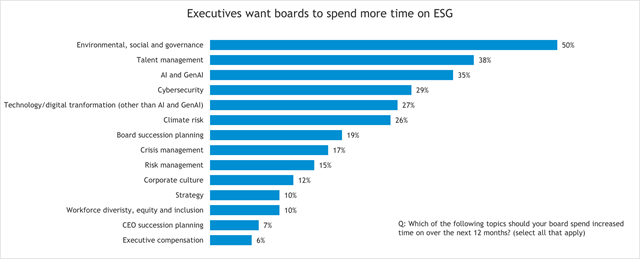
Figure 1: PwC and The Conference Board, Board effectiveness: A survey of the C-suite, May 2025
- 73% of Singaporeans believe that ESG and profitability go hand in hand (SEC Newgate)
- 73% of Singaporeans agree that companies should more clearly communicate what they are doing to improve their performance on ESG issues (SEC Newgate)
- 72% of Singaporeans expect that companies play a more active role in society these days (SEC Newgate)
A Competitive Advantage of ESG Oversight
While some companies adopt ESG oversight to follow industry trends or satisfy stakeholder expectations, there are substantial strategic benefits to embedding ESG into board governance:- Positioning for Long-Term Success: ESG is increasingly seen as the future of business. Companies that emphasise ESG oversight are better equipped to identify growth avenues and adapt to evolving market demands.
- Demonstrating Value Creation: ESG oversight enhances transparency, allowing companies to better communicate how they create long-term value.
- Improving Operational and Cost Efficiency: Monitoring ESG practices can help uncover opportunities for optimisation and cost savings within a company’s supply chain, leading to improved overall performance.
- Attracting Clients: A reputation for strong ESG oversight enhances a company’s appeal to clients. Individuals and organisations seeking reliable partners often opt for companies monitoring social and environmental responsibilities.
For Companies: How to Close ESG Oversight Gaps
While there are numerous approaches a company can consider implementing, BDO offers tailored solutions designed to help establish a robust ESG framework and effectively close oversight gaps that occur. BDO can help you take the following approaches:1. Conduct an ESG Maturity Assessment
Identify current ESG strengths and weaknesses specific to your company to guide improvement efforts.
2. Assign ESG Responsibilities to a Board Committee
Ensure ESG oversight is embedded at the governance level and provide training to build ESG expertise
among board members.
3. Train Employees on ESG Principles
Foster a company-wide understanding of ESG to create value and encourage responsible practices across
all levels.
4. Strengthen Monitoring of Internal Controls
Enhance systems for tracking ESG-related data to support accurate and transparent ESG disclosures.
5. Align Strategy and Risk Management with Sustainability
Integrate sustainability into corporate strategy using standards like IFRS Sustainability Disclosure Standards
(IFRS SDS), TCFD, or GRI.
6. Use Scenario Analysis and Climate Risk Assessment
Identify ESG risks and opportunities and develop measurable targets or KPIs to drive performance and
accountability.
7. Stay Updated on ESG Regulations and Best Practices
Continuously monitor evolving ESG regulations and industry standards and adapt internal processes to
remain compliant and competitive.
---------------
References
- Accounting and Corporate Regulatory Authority, Shin, S.-P. S., Mak, Y. T., Bobba, S., Choi, G., & Kim, G. H. (2024). Unveiling Climate-related Disclosures in Singapore: Getting ready for the ISSB Standards. In ACRA. Accounting and Corporate Regulatory Authority and NUS Sustainable and Green Finance Institute. https://www.acra.gov.sg/docs/default-source/news-events-documents/2024/acra-nus-study/report.pdf
- KPMG. (2024, November 28). Singapore Achieves Progress in Sustainability Reporting, Outperforming Global Benchmarks. KPMG. https://kpmg.com/sg/en/home/media/press-releases/2024/11/singapore-achieves-progress-in-sustainability-reporting-outperforming-global-benchmarks.html
- PricewaterhouseCoopers. (2025, June 17). ESG oversight: The corporate director’s guide. PwC. https://www.pwc.com/us/en/services/governance-insights-center/library/esg-corporate-directors-guide.html
- SEC Newgate. (2024). ESG Monitor 2024: Singapore Summary. SEC Newgate. https://secnewgate.com/esg-monitor/reports/singapore-report-2024/
- Singapore Management University Academy. (2025, February 25). Beyond Compliance: How ESG Drives Innovation, Resilience, and Competitive Advantage in Business Strategy. SMU Academy. https://academy.smu.edu.sg/insights/beyond-compliance-how-esg-drives-innovation-resilience-and-competitive-advantage-business